Legacy is often measured by what we create. Less often do we ask what we choose to preserve. Yet the future of science depends on both. Every discovery builds on knowledge that someone else had the foresight to document, protect, and pass on.
That question came into focus after attending a recent screening of Little Guayule: The Lost Manzanar Rubber Project and the discussion that followed. Rather than simply recounting an overlooked chapter in the history of guayule, the film prompted a broader reflection on scientific stewardship, historical memory, and the responsibility each generation has to preserve the work of those who came before us.
Why we care so deeply about preserving certain stories. What is it that compels children and grandchildren to spend years uncovering the work of people who are no longer here? Why do some scientific discoveries become part of our collective memory while others disappear—not because the science was less important, but because of who did the work and under what circumstances? And what does our answer say about us—not only as families, but as a scientific community and as a society?
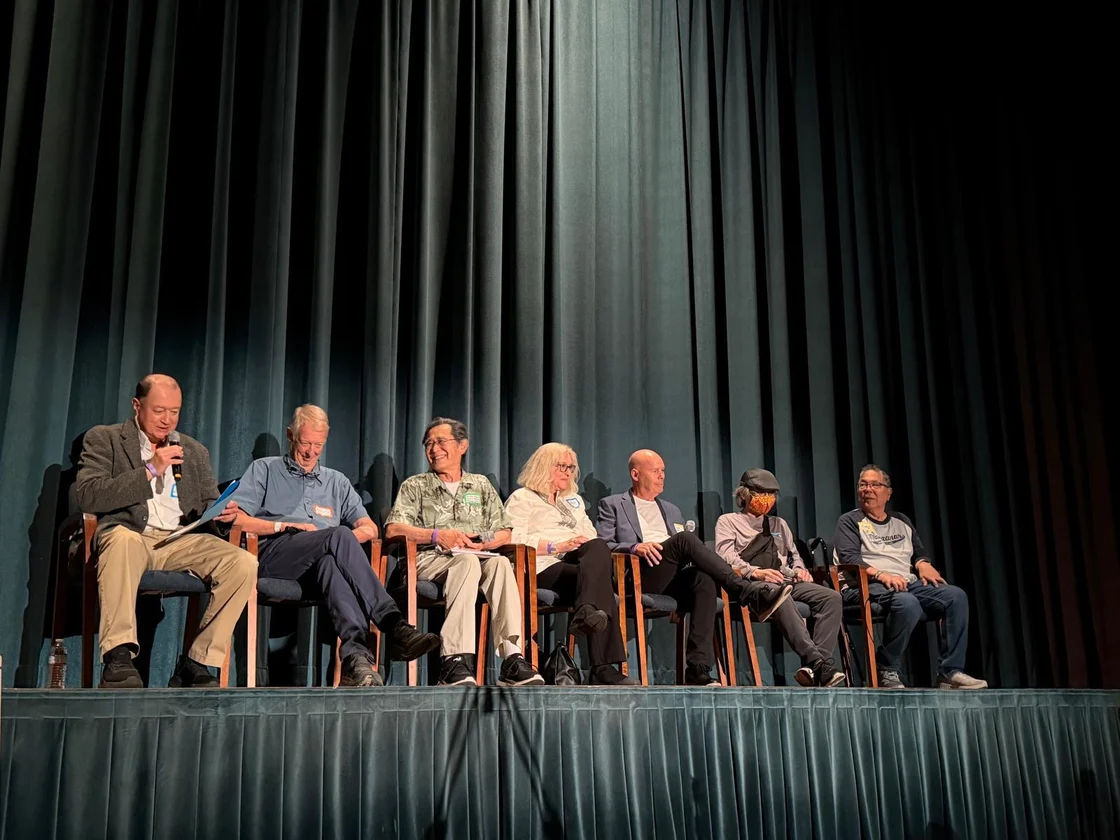
Those questions stayed with me after a recent watching Little Guayule: The Lost Manzanar Rubber Project and participating in the discussion afterward with Bruce Emerson, Glenn Kageyama, Betty Smocovitas, Richard Imamura, Corey Shiozaki, Jeff Martin, and others who have dedicated years to bringing this remarkable story back into the light.
Before seeing the film, I knew the broad outlines of the wartime rubber shortage. I didn't appreciate the scale of the scientific effort it triggered. After Japan occupied much of Southeast Asia, the United States lost access to the overwhelming majority of its natural rubber supply. The federal government responded by launching the Emergency Rubber Project—what some historians have described as the "Manhattan Project of the plant sciences"—bringing together hundreds of botanists, chemists, agronomists, engineers, and geneticists in search of a domestic source of natural rubber.
Against that backdrop, the Manzanar project seems almost improbable.
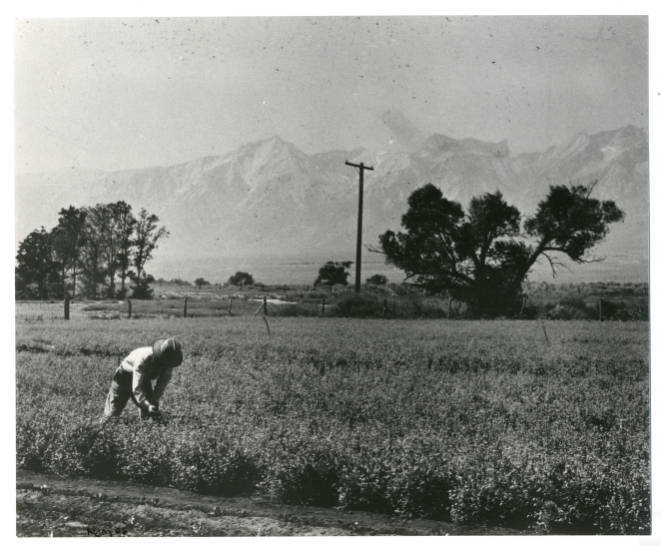
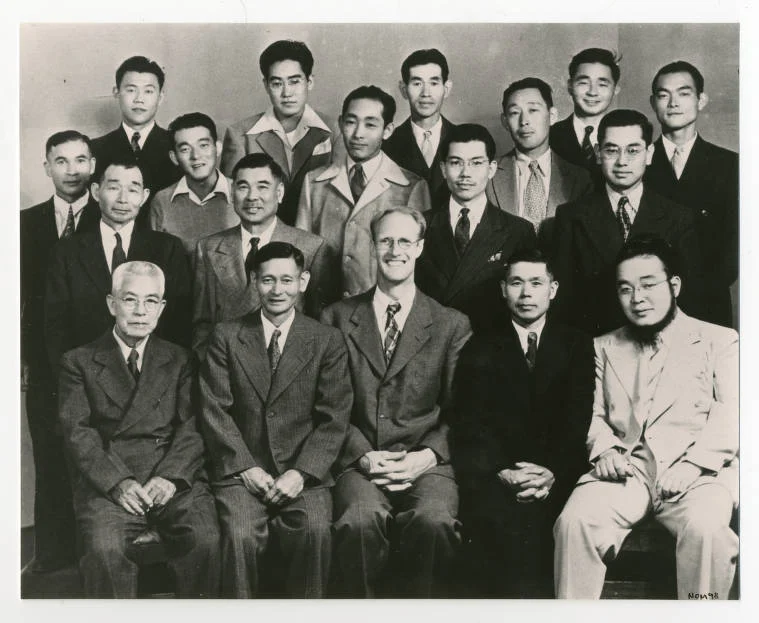
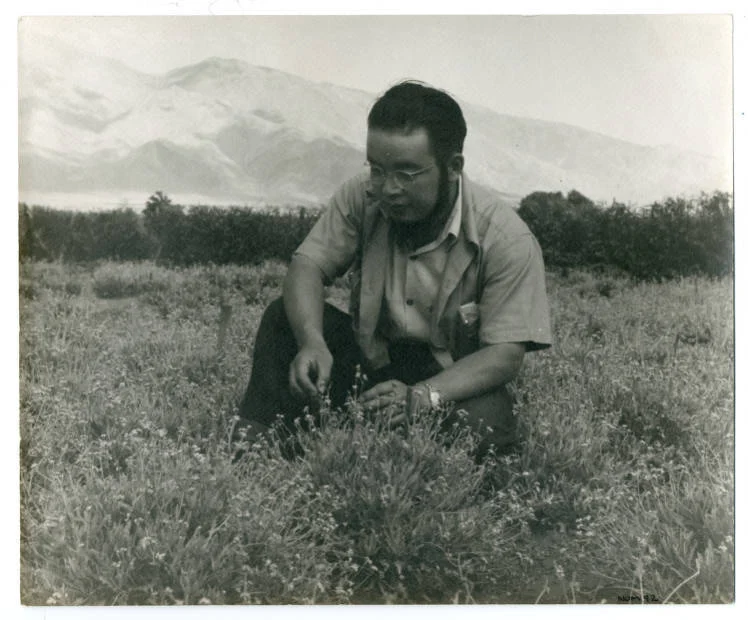
While more than 10,000 Japanese Americans were incarcerated behind barbed wire, Dr. Robert Emerson of Caltech assembled a small team of Japanese American scientists, horticulturalists, engineers, machinists, and farmers to tackle the same national problem. Unlike the government's much larger effort in Salinas, which focused on scaling cultivation and mechanizing production, the Manzanar group concentrated on improving the plant itself and the quality of the rubber it could produce. Working with little funding, limited access to plant material, inadequate resources, and under conditions no scientist should ever have had to endure, they pioneered methods for propagating high-yield guayule from cuttings, improved latex extraction and resin purification, and demonstrated that guayule rubber could achieve tensile strengths exceeding traditional Hevea rubber.
What remains most remarkable is not simply what they accomplished, but the conditions under which they accomplished it. They had little funding, limited water, and very little institutional support. Dr. Robert Emerson and his friend Hugh Anderson personally helped sustain the project when official support fell short. Yet the team continued to do science. In 1944, while living behind barbed wire, they published The Propagation of Guayule from Cuttings, followed by papers describing improved latex extraction and resin removal.
They were advancing plant science, chemistry, and materials engineering while imprisoned. They could have been defined by their incarceration. Instead, they chose to define themselves by their contribution. That paradox has stayed with me.
%20and%20Nishimura%20operating%20the%20Mill.webp)
The discussion that followed revealed that the documentary itself is an act of scientific restoration. Bruce Emerson is preserving the legacy of his grandfather. Glenn Kageyama is preserving the story of his grandfather, one of the horticulturalists at Manzanar. Betty Smocovitas has devoted years to documenting the contributions of Dr. Masuo Kodani. Richard Imamura and Corey Shiozaki have invested years ensuring that this history is not lost to another generation. Jeff Martin's work commercializing guayule through Yulex demonstrates that the promise those researchers saw more than eighty years ago was real. Every person in that room, in their own way, is carrying forward work that someone else began.
As the discussion unfolded, I found myself looking around the room as much as I was listening to the speakers. Many of those in attendance were Japanese Americans whose parents or grandparents had been incarcerated at Manzanar or other internment camps. It didn't feel like a film screening. It felt like a community reclaiming a piece of its own history. Descendants, historians, scientists, entrepreneurs, and filmmakers were all participating in the same act of stewardship: ensuring that the contributions of this remarkable group of researchers would no longer be forgotten. What surprised me most wasn't the science. It was realizing that so many people in that room had devoted years—sometimes decades—not because there was funding, prestige, or recognition, but because they believed these stories deserved to survive. In many ways, the descendants demonstrated the same persistence as the scientists themselves.
One conversation from that afternoon continues to linger. Jeff mentioned that roughly a dozen banker boxes of original documents from Hugh Anderson, Manzanar, and the Emergency Rubber Project still sit in storage in San Diego, waiting to be digitized and archived. Those boxes represent far more than historical records. They contain correspondence, research notebooks, observations, photographs, and decisions made by people who believed they were solving an important problem despite extraordinary circumstances. They remind us that history is not preserved automatically. Someone has to decide that it is worth saving.
That conversation also reframed how I think about AI and the future of scientific knowledge. We often talk about artificial intelligence as though knowledge simply exists, waiting to be analyzed. But knowledge has to survive before it can be discovered. Archives have to be preserved before they can be digitized. Papers have to be found before they can be connected. Every large language model, every search engine, and every future researcher depends on someone deciding that the primary sources are worth preserving in the first place. If we fail to preserve the work of one generation, we quietly limit what the next generation will ever be able to learn.
My daughter also attended the screening. She's twenty-four now, but when she was fifteen she spent several weeks in Guatemala on a Hevea plantation and latex processing facility. She worked alongside engineers and laboratory technicians, assisted with latex testing, operated centrifuges, prepared samples, and cleaned laboratory equipment. That experience gave her an appreciation for something this film also reminded me of: scientific progress is a collective effort. Behind every paper, every breakthrough, and every innovation are countless people whose careful, hands-on work makes discovery possible.
The Little Guayule documentary offered the historical counterpart to that lesson. It wasn't only about remarkable scientific achievements. It was about recognizing the people whose work made those achievements possible, many of whom were never given the credit they deserved.
I don't know what part of the discussion will stay with her years from now. Perhaps it will be the science. Perhaps it will be meeting the families who have spent decades ensuring that their parents' and grandparents' work was not forgotten. Or perhaps it will simply be the understanding that scientific progress is not only about making discoveries, but also about preserving the stories of the people who made them.
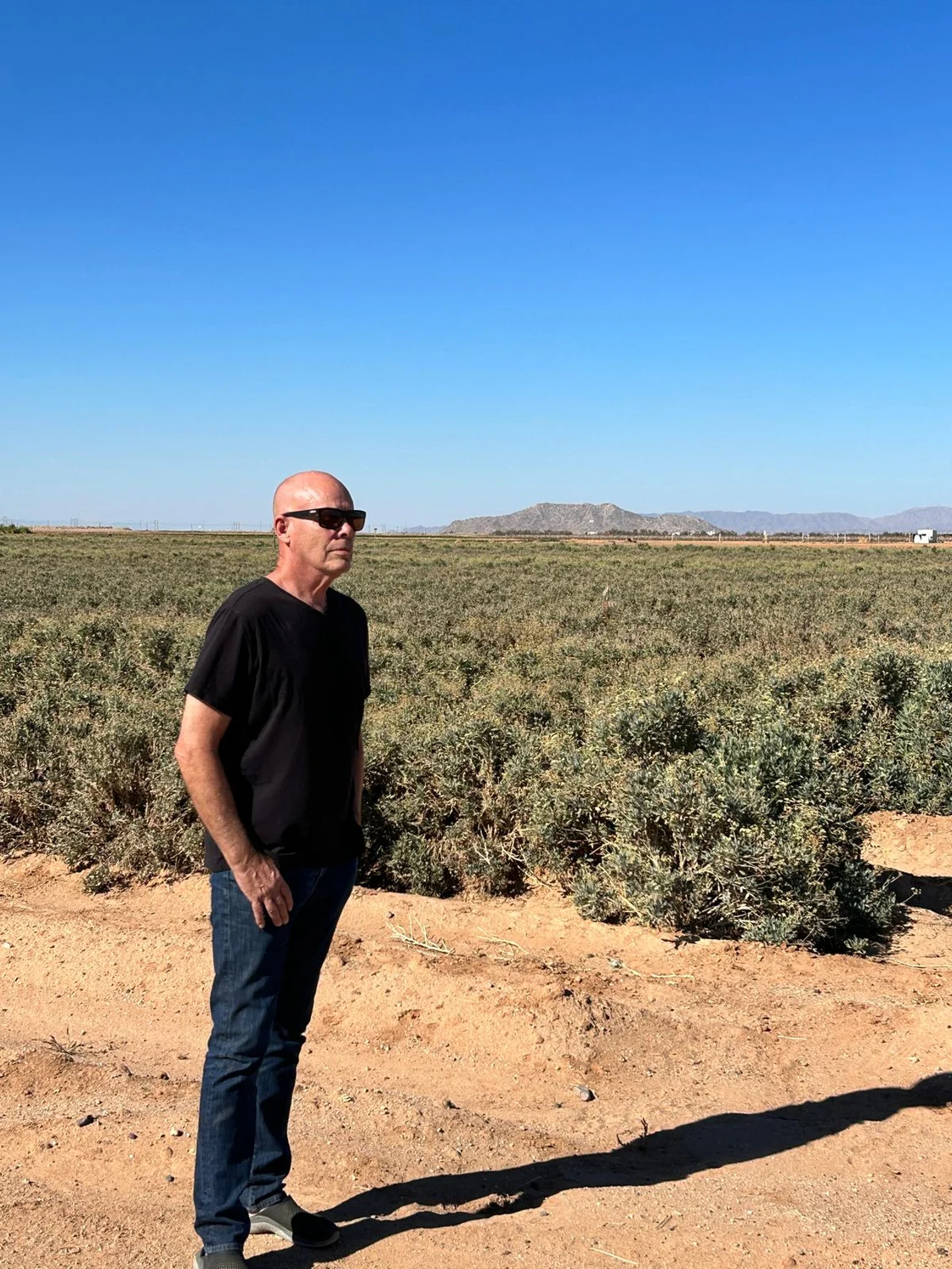
Long after the discussion ended, my thoughts kept returning to those banker boxes in storage. We often think of archives as records of the past. Increasingly, they seem more like gifts to the future. Every scientific breakthrough, every historical insight, and every new connection we make—whether through traditional scholarship or artificial intelligence—depends on someone making the decision that a piece of knowledge is worth preserving.
Perhaps that is the truest measure of legacy. Not simply what we discover, invent, or build, but what future generations choose to preserve, revisit, and carry forward. Scientific progress has always been cumulative, with each generation building on the curiosity, perseverance, and discoveries of those who came before.
For those of us working to shape the future of natural rubber, remembering its past is more than an act of history. It is an act of stewardship. By preserving the stories of the scientists, engineers, farmers, and visionaries who came before us, we not only honor their contributions—we strengthen the foundation for the discoveries still to come.
We preserve the past not out of nostalgia, but because it enables the future.
"LIttle Guayule - The Lost Manzanar Rubber Project" documentary by Richard Imamura and Cory Shiozaki
https://rafu.com/2026/05/little-guayule-the-lost-manzanar-rubber-project-to-debut-at-gardena-cinema/
https://libguides.csudh.edu/Digital-Collections/
Images Courtesy of the Eastern California Museum